 Prakhar Gautam
Chargers have shrunk a lot in the last few years. A 65-watt block that used to hog half an outlet strip now fits next to your keys. Your phone's battery has almost nothing to do with it. The change is in the semiconductor doing the switching.
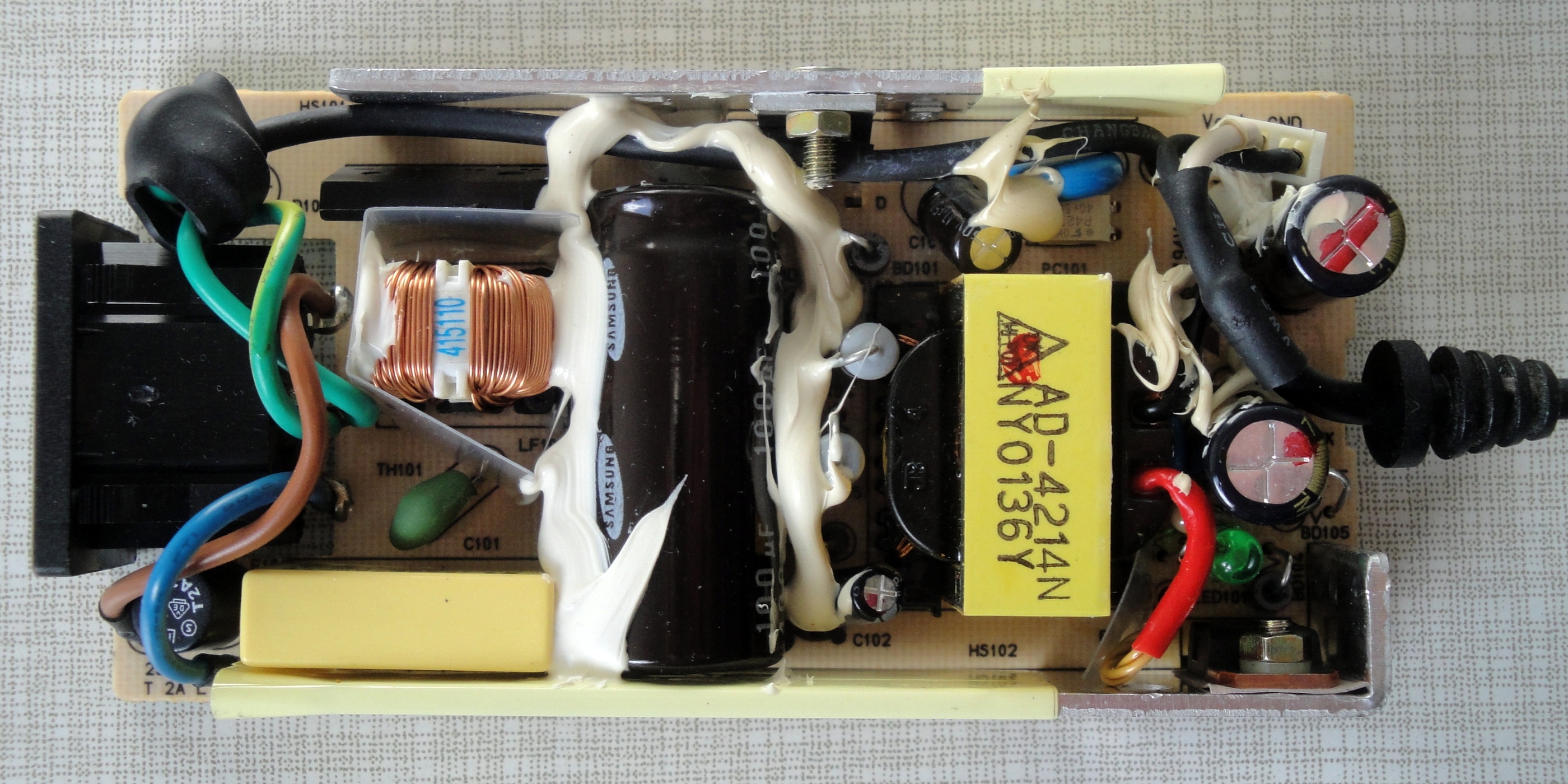
The transformer is the problem
A charger's job is to take wall power and step it down to something your device can use, and it does this by switching the incoming power on and off at high frequency through a small transformer, thousands to millions of times a second. The faster you can switch, the smaller the transformer and supporting coils can be. Size scales down roughly in proportion to frequency.
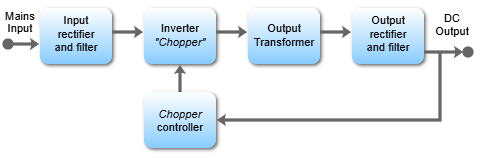
The limiting factor has always been the switching transistor. Ordinary silicon MOSFETs lose more energy as heat the faster you switch them, and that heat has to go somewhere, usually into a bigger heatsink and a bigger enclosure to dissipate it safely. For decades that tradeoff capped how small a charger could get at a given wattage.
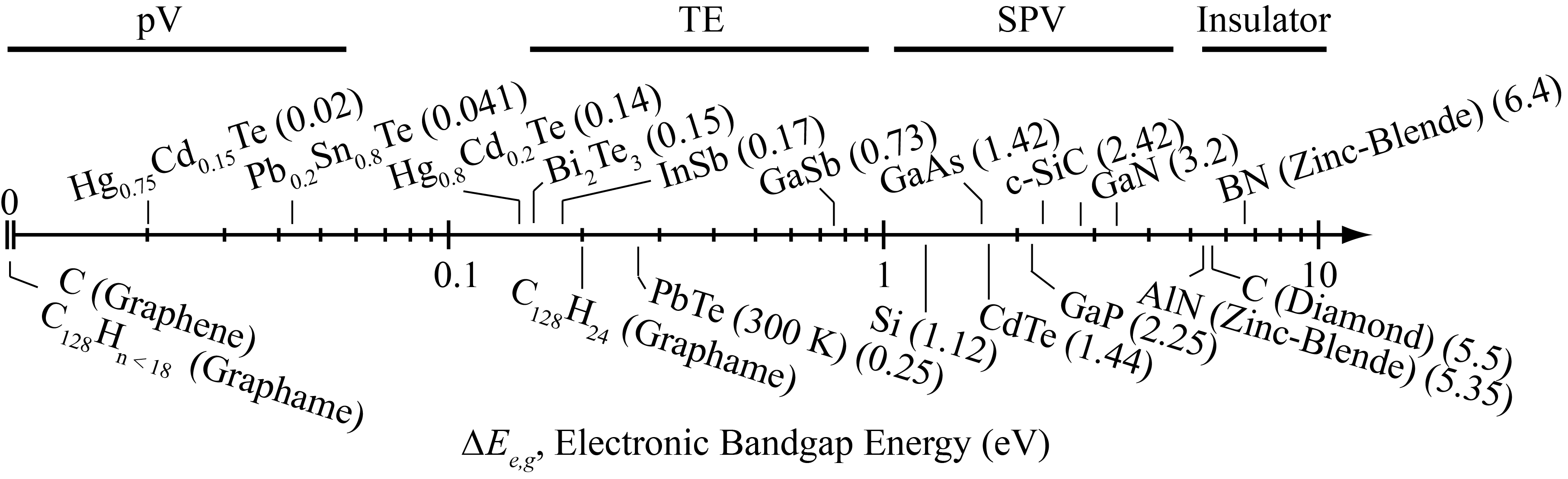
A wider bandgap changes the math
Gallium nitride (GaN) is a wide-bandgap semiconductor, which in practice means it can switch far faster than silicon while wasting much less energy doing it. Higher switching frequency lets the transformer and inductors shrink dramatically; lower switching losses mean less heat, which means a smaller enclosure and a smaller (or absent) heatsink. Both effects push in the same direction: less silicon-era bulk, for the same or higher wattage.
That combination is what produced the wave of tiny 65W and 100W GaN chargers over the past few years.
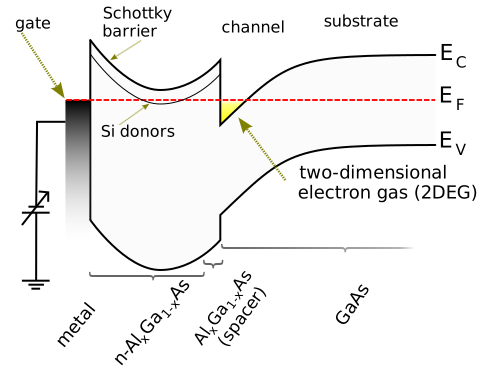
GaN and silicon carbide (SiC) get lumped together constantly, and they shouldn't be. Both are wide-bandgap semiconductors, but they specialize in opposite directions. SiC wins at higher voltages and power levels: EV inverters, industrial drives. GaN wins at higher frequencies and lower-to-mid power: chargers, power supplies, RF amplifiers.
Cooler and cheaper to run
Lower switching losses mean a GaN charger wastes less power as heat for the same job, which matters more at scale than it sounds: a data center's worth of power supplies running a percent or two more efficiently adds up fast. On your desk it just means the brick barely gets warm anymore.
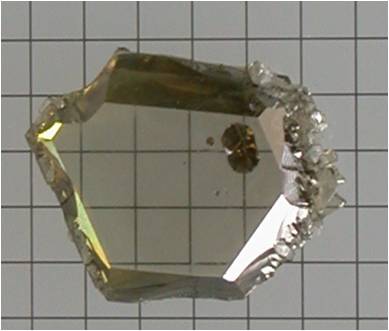
Where GaN goes next
The price is the thing I'd watch. GaN was a premium feature a few years ago and it's already turning up in budget chargers as fabrication scales, which usually means the interesting part of the adoption curve is over. Multi-port chargers are the other obvious direction, since splitting 100W-plus across several ports without growing the enclosure is only practical with a switch this efficient. The bigger prize is server and data-center power delivery, where a percentage point of efficiency is worth far more than a few cubic centimeters.
Nobody announced any of this. You just notice at some point that the charger in your bag stopped being the heaviest thing in there.
Further reading
- Udabe, A., Baraia-Etxaburu, I., & Garrido Diez, D. "Gallium Nitride Power Devices: A State of the Art Review." IEEE Access, 11, 48628–48650 (2023). DOI: 10.1109/ACCESS.2023.3277200
- Pushpakaran, B.N., Subburaj, A.S., & Bayne, S.B. "Commercial GaN-Based Power Electronic Systems: A Review." Journal of Electronic Materials, 49, 6247–6262 (2020). DOI: 10.1007/s11664-020-08397-z
- Mishra, U.K. "Gallium Nitride Versus Silicon Carbide: Beyond the Switching Power Supply." Proceedings of the IEEE, 111(4), 322–328 (2023). DOI: 10.1109/JPROC.2023.3254279
- Buffolo, M., Favero, D., Marcuzzi, A., et al. "Review and Outlook on GaN and SiC Power Devices." IEEE Transactions on Electron Devices, 71(3), 1344–1355 (2024). DOI: 10.1109/TED.2023.3346369
- Rafin, S.M.S.H., Ahmed, R., Haque, M.A., et al. "Power Electronics Revolutionized: A Comprehensive Analysis of Emerging Wide and Ultrawide Bandgap Devices." Micromachines, 14(11), 2045 (2023). Open access. pmc.ncbi.nlm.nih.gov
- Ponnambalam, R., & Vairavasundaram, I. "GaN-Based DC-DC Converters for EV Fast Charging: A Review." Results in Engineering, 28, 107548 (2025). DOI: 10.1016/j.rineng.2025.107548
- Texas Instruments. "TI expands low-power GaN portfolio, enabling AC/DC power adapters to shrink 50%." (2023). ti.com
- Efficient Power Conversion Corporation. "GaN for DC-DC Conversion — Buck Converters." Reference design guide. epc-co.com
- "Navitas' GaN and SiC devices adopted in Dell's family of 60–360W AI notebook adapters." Semiconductor Today (2025). semiconductor-today.com
- Dagher, R. "From Chargers to Data Centers: Power GaN Market Set for Rapid Sixfold Expansion by 2030." Yole Group (2025). yolegroup.com
- Alqarqaz, Q. "Gallium Nitride: The Ideal Semiconductor for Power-Hungry Electronics." IEEE Spectrum (2019). spectrum.ieee.org
- Zorpette, G. "Is This Hybrid Tech the Future of Power Electronics?" IEEE Spectrum (2024). spectrum.ieee.org
- Brookes, T. "What Is a GaN Charger, and Why Will You Want One?" How-To Geek. howtogeek.com
- Bonk, L. "Why bulky laptop chargers are a relic of the past." Engadget (2026). engadget.com